Small Group Reading Activities That Actually Work: Build One System You Can Use All Year
Every September, I watch teachers do the same thing.
They finish their beginning-of-year assessments, create their small groups, and then start searching for activities.
Before long, they're scrolling Pinterest, downloading printables, digging through file cabinets, and printing something different for every group. One group has magnetic letters. Another has a worksheet. Another is playing a game they found online the night before.
I've been there.
But after years of teaching, coaching, and working alongside literacy teams, I've realized something.
Effective small-group instruction isn't about having more activities. It's about having better systems.
The strongest teachers I know aren't constantly searching for the next reading intervention activity. They rely on a handful of consistent instructional routines they use every single day. The routine stays the same. The phonics skill changes.
That's exactly what I build for the teachers I coach.
Not a giant intervention binder.
Not twenty tubs filled with random materials.
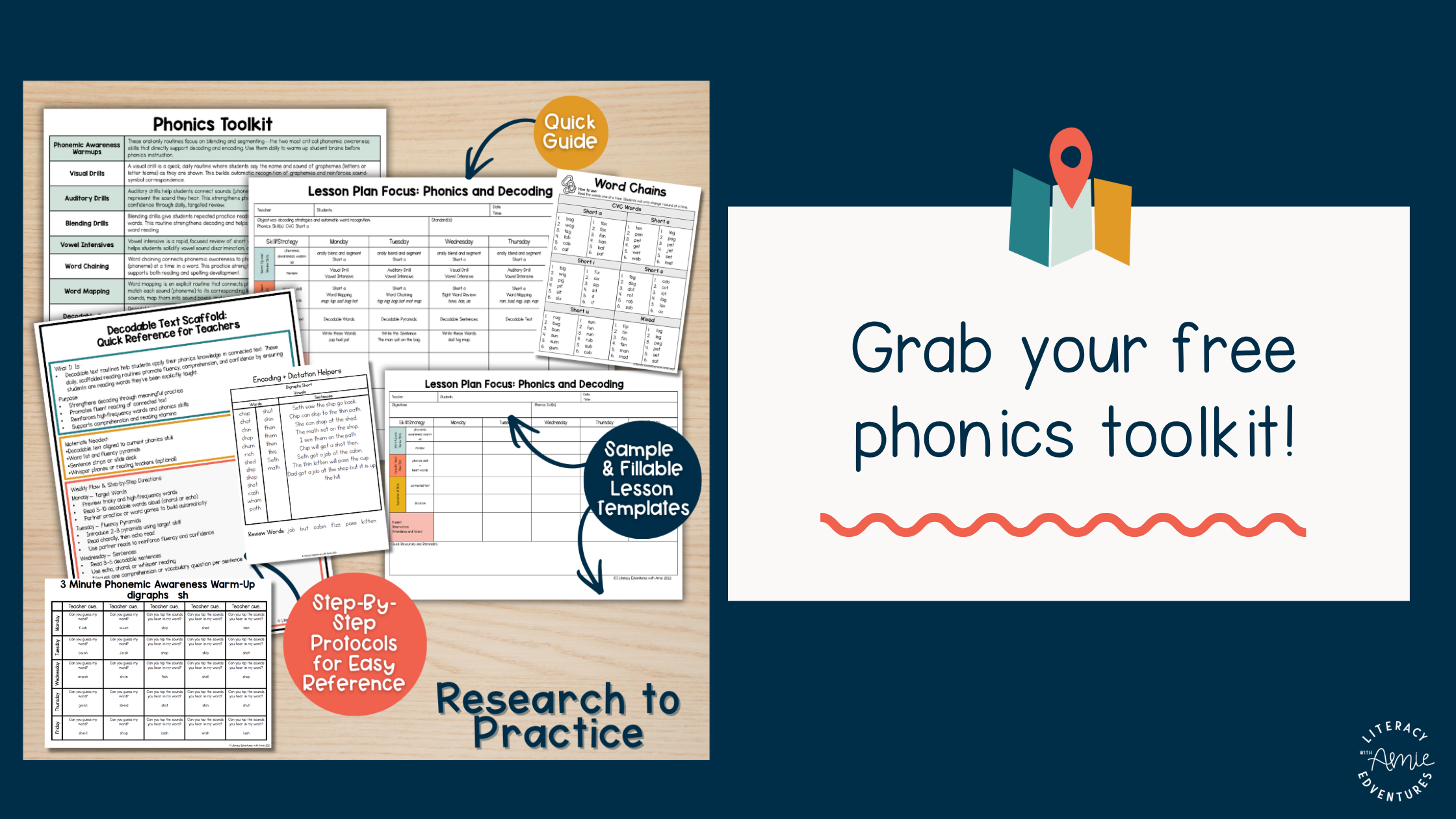
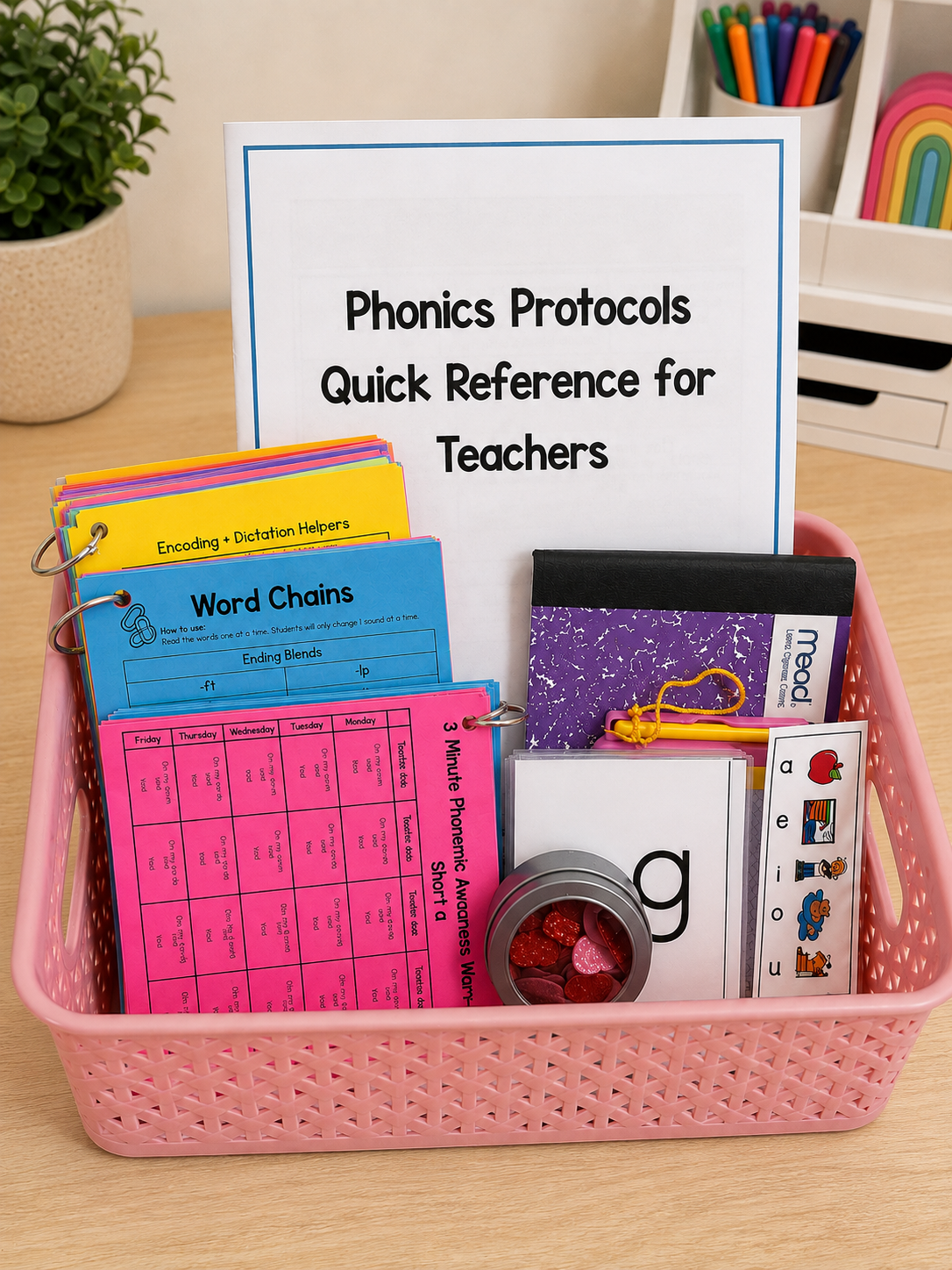
I create durable activities for every major instructional routine I use during small-group instruction. Each routine has its own binder ring. On that ring are cards for every phonics skill we teach throughout the year—from short vowels and digraphs to vowel teams and multisyllabic words.
When it's time for a group, teachers simply grab the set they need, flip to the phonics skill they're teaching, and they're ready to go. Need phonemic awareness? Grab that ring. Dictation? Grab that ring. Word mapping? Yes, we have one for that too.
The routine never changes.
Only the instructional content does.
That simple shift has completely changed the way the teachers I coach run intervention.
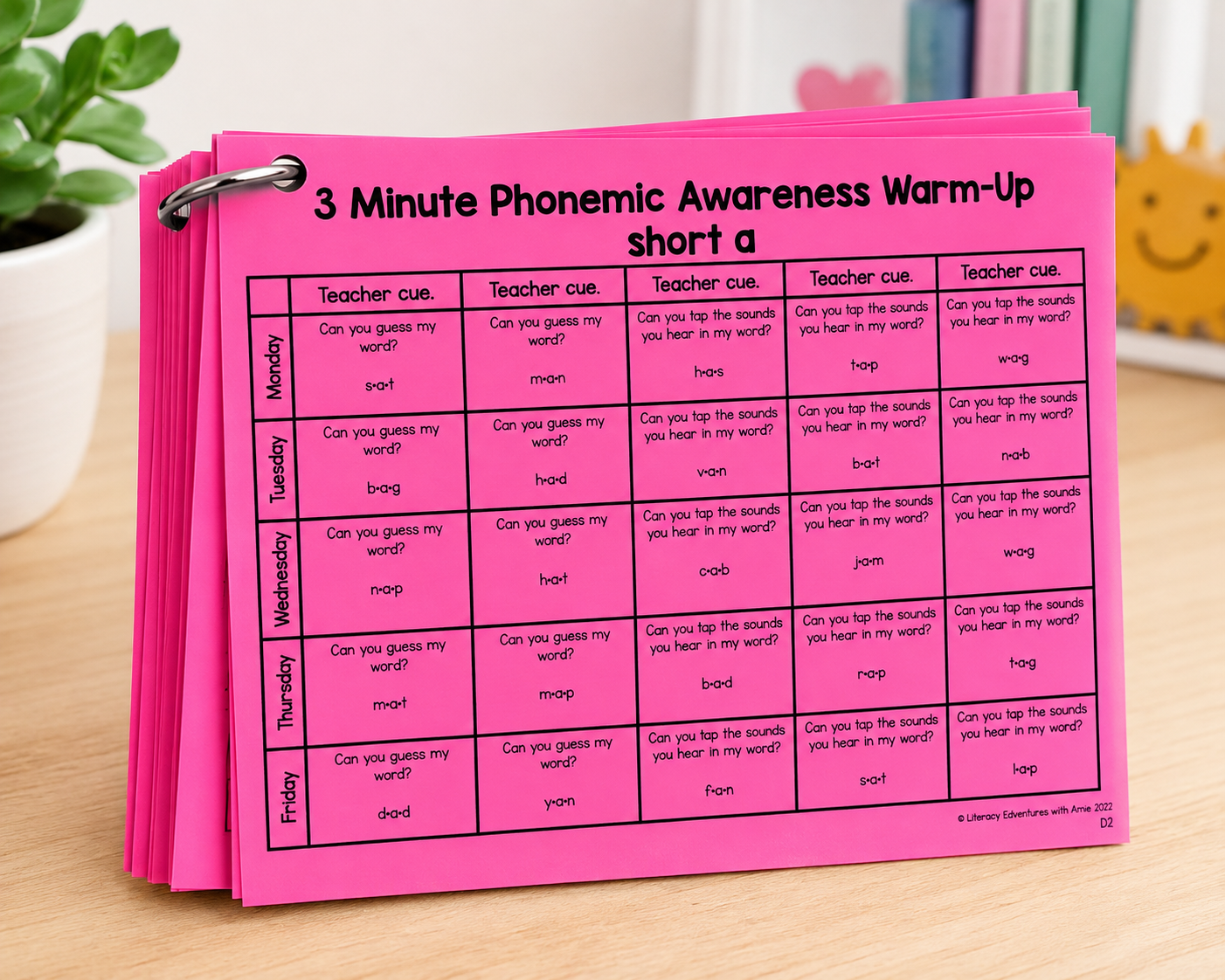
Start Every Lesson with a Consistent Phonemic Awareness Routine
If you walked into one of my intervention groups, you'd notice something almost immediately.
We always start in the same place.
Not because students need the exact same lesson every day, but because they benefit from predictable instructional routines.
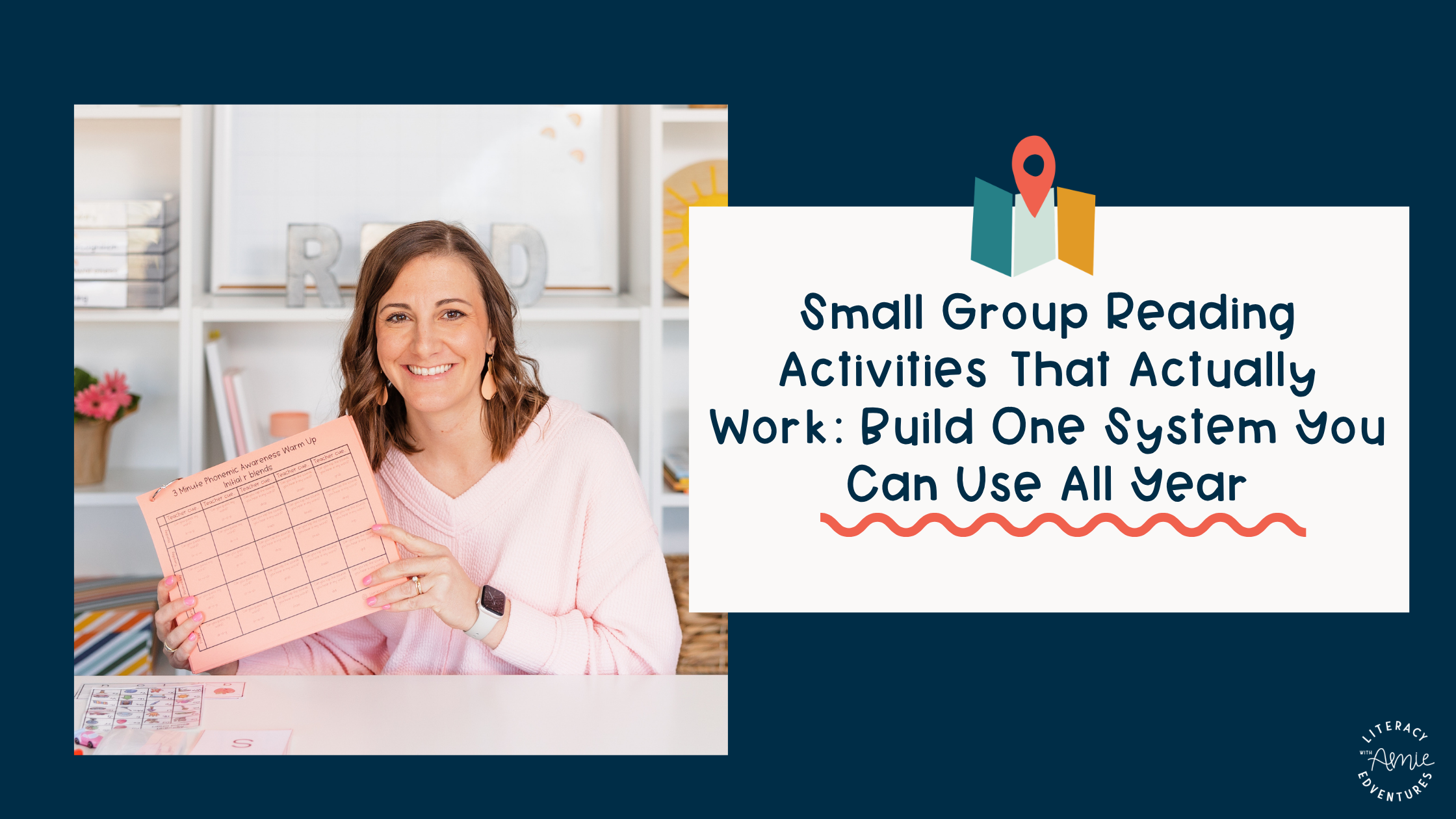
Research consistently points to blending and segmenting phonemes as two of the most important phonemic awareness skills for developing readers. Rather than spending instructional time introducing a different game every week, I focus on helping students repeatedly practice the skills that have the greatest impact on decoding and spelling. Research also supports connecting phonemic awareness to letters as soon as students have sufficient letter-sound knowledge, rather than keeping phonemic awareness completely separate from print.
That's why every phonemic awareness card I create follows the same routine.
The activity never changes.
The words do.
When I build these for teachers, I print the routines on heavy cardstock, laminate them, and organize every phonics skill onto a single binder ring. One flip might take you to short a. Another flip might take you to sh or vowel teams. Teachers don't have to wonder what to do next because the routine is already established.
Students know exactly what to expect.
Teachers know exactly what to teach.
Everyone wins.
Word Chaining: One Routine, Big Impact
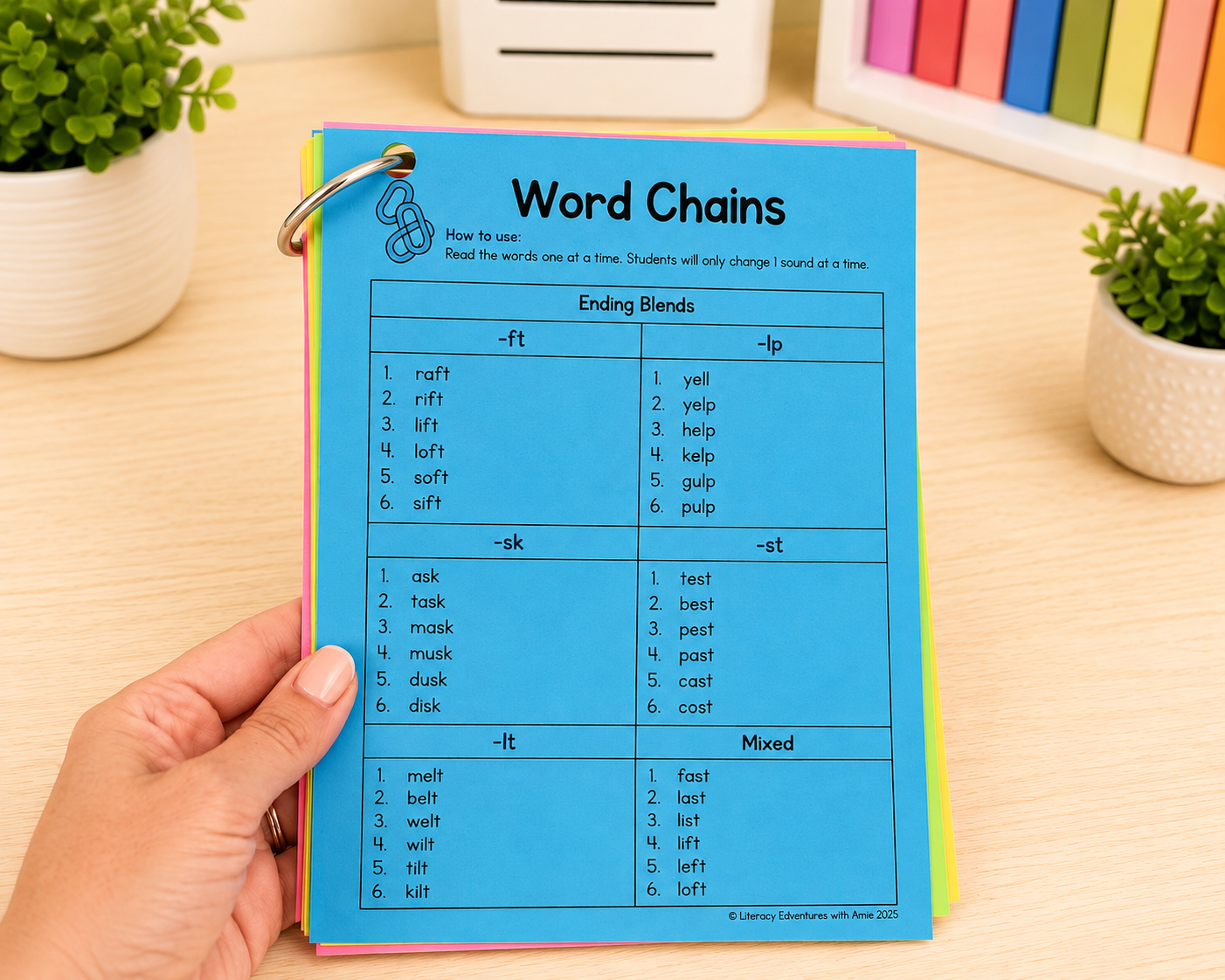
If I had to choose one small-group reading activity that gives me the biggest instructional payoff, it would be word chaining.
Word chaining slows students down in all the right ways.
Every time one sound changes, students have to notice it, connect it to the correct grapheme, blend the word again, and confirm that what they read actually makes sense.
There isn't any guessing.
There isn't any memorizing.
Students are paying attention to every phoneme in every word.
What I love most about word chaining is that I never have to teach students a new routine. Once they understand how word chaining works, we simply apply it to whatever phonics pattern we're studying. Today it might be short vowels. Next month it might be vowel teams. By spring, we may be working with multisyllabic words.
The process stays exactly the same.
That's why every teacher I coach receives a Word Chaining Set. Every phonics skill has its own cardstock card already prepared. Teachers simply flip to the skill they're teaching that day and begin instruction.
No searching.
No last-minute planning.
Just purposeful teaching.
Word Mapping: Build the Brain, Not the Worksheet
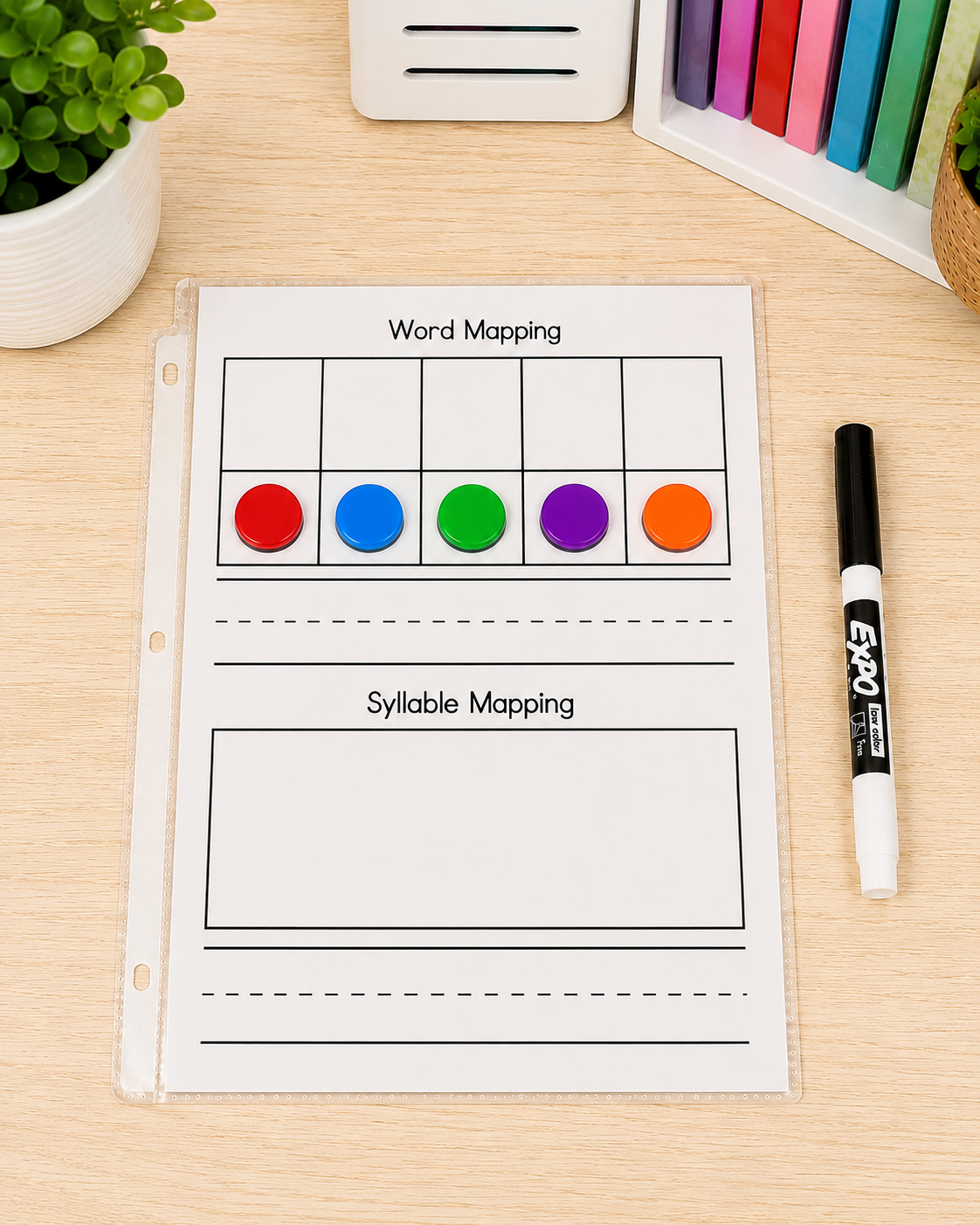
Word mapping has become one of my favorite instructional routines because it helps students connect speech to print in a meaningful way.
Too often, teachers feel like they need a different recording sheet for every phonics skill.
They don't.
I use the exact same mapping routine all year.
Students push the sounds.
Map the phonemes to graphemes.
Write the word.
Read the word.
The template stays the same while the words become more sophisticated. That consistency allows students to focus on making sound-symbol connections instead of figuring out another worksheet.
When I create these for teachers, every phonics skill already has its own mapping cards waiting on the binder ring. Teachers simply flip to the appropriate skill and continue teaching without ever changing the routine.
Dictation: Where Reading and Spelling Come Together
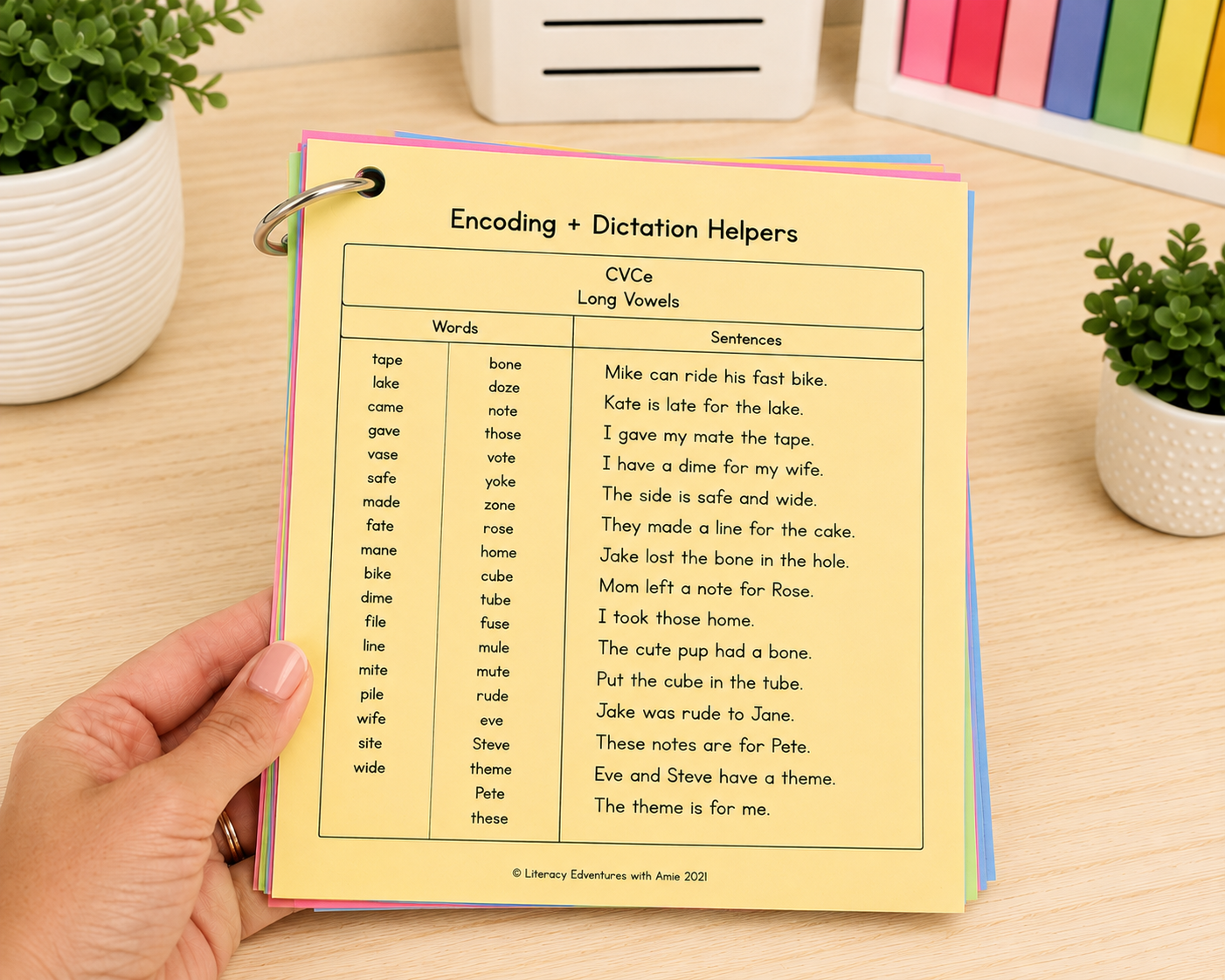
If there's one instructional routine I wish every teacher used more often, it's dictation.
Dictation asks students to apply everything they've learned.
Can they hear the sounds?
Can they connect those sounds to letters?
Can they remember the phonics pattern?
Can they spell the word?
Can they read it back and self-correct if needed?
That's a tremendous amount of learning packed into just a few minutes.
Just like every other routine in my toolkit, I don't create a new dictation page every week. I build one consistent instructional routine that teachers can use all year. The words and sentences change to match the phonics skill, but the structure never does.
When students know the routine, they can focus all of their attention on applying the skill.
The Real Goal Isn't Better Activities
People often ask me why I spend so much time creating these routine cards for teachers.
The answer is simple.
I'm not trying to save them paper.
I'm trying to save their thinking.
I don't want teachers spending time wondering which activity they'll use on Monday morning.
I want them spending that time looking at student data, analyzing errors, and deciding what to teach next.
The instructional routine should already be solved.
When teachers don't have to reinvent small-group instruction every week, they become better decision-makers. They spend less time planning and more time responding to what students actually need.
That's what great intervention looks like.
It's not built on endless activities.
It's built on consistent routines, purposeful instruction, and thoughtful instructional decisions.
Because in the end, students don't become stronger readers because we found another cute activity online.
They become stronger readers because every instructional minute has a purpose.