The 4 Components of Effective Reading Intervention in K–2
When a student struggles with reading, the instinct is often to give them more practice.
More books.
More worksheets.
More time.
But struggling readers don’t simply need more practice.
They need targeted instruction that strengthens the systems that make reading possible.
In my work as a literacy coach, I’ve had the opportunity to support classroom teachers, interventionists, and specialists working with struggling readers. And one thing becomes clear very quickly:
Struggling readers make the most progress when intervention is intentional, systematic, and aligned with classroom instruction. Too often, intervention becomes its own separate world — different routines, different materials, and different expectations than what students experience during core instruction. But effective literacy systems don’t work that way.
Intervention should strengthen and extend classroom instruction, not replace it.
In kindergarten through second grade, effective reading intervention consistently includes four essential components:
Phonological awareness
Explicit phonics and word reading
Connected reading with decodable text
Encoding through spelling and dictation
When these pieces work together—and when they align with classroom instruction—students begin to make meaningful progress.
Let’s take a closer look at each of these components.
1. Phonemic Awareness: Blending and Segmenting Sounds
Before students can read words on a page, they must first be able to hear and work with the individual sounds in spoken words.
This ability—phonemic awareness—is one of the strongest predictors of early reading success.
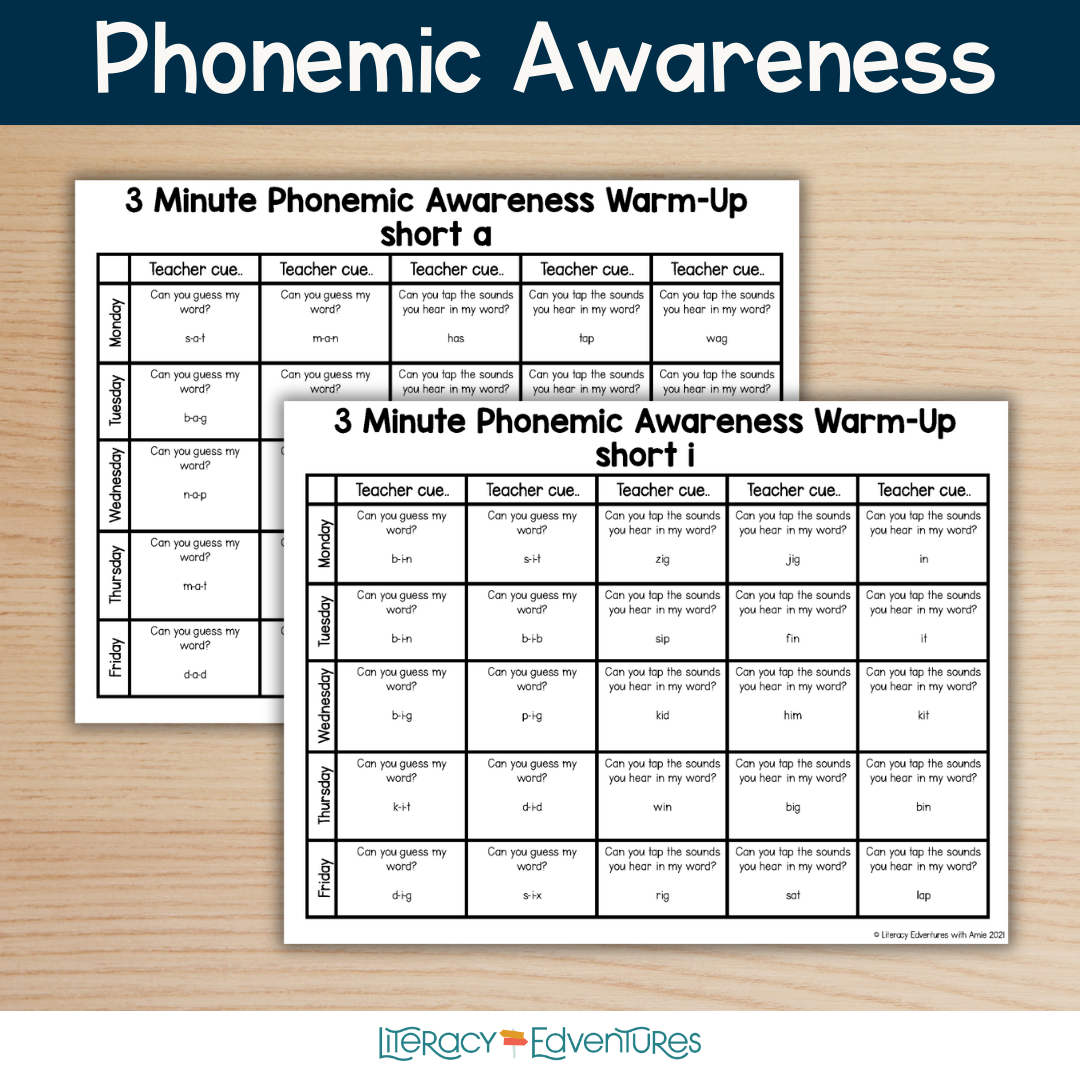
Two of the most powerful phonemic awareness skills we can build with struggling readers are blending and segmenting.
Blending means hearing individual sounds and putting them together to make a word.
For example, a teacher might say:
/m/ /ă/ /p/
Students respond:
map
Segmenting works in the opposite direction. Students hear a word and break it apart into its individual sounds.
For example:
Teacher says: ship
Students say: /sh/ /ĭ/ /p/
These two skills are incredibly important because they directly support both decoding and spelling. When students read a word, they must blend sounds together. When they spell a word, they must segment it apart.
That’s why blending and segmenting are often the most impactful phonemic awareness activities to include during intervention.
In practice, these routines can be quick and simple:
Students might tap their fingers as they segment sounds.
They might push counters to represent each phoneme.
Or they might orally blend sounds the teacher says.
The key is that students are repeatedly practicing the sound work that supports the alphabetic code.
Even just a few minutes of blending and segmenting at the beginning of a lesson can strengthen the foundation struggling readers need before moving into phonics, reading, and spelling.
2. Explicit Phonics and Word Reading
Once students can hear the sounds in words, they must learn how those sounds connect to letters and spelling patterns.
This is where explicit phonics instruction becomes critical.
Students need opportunities to see how phonemes (sounds) connect to graphemes (letters or letter combinations). This connection is what allows students to move from hearing sounds in words to actually reading and spelling them.
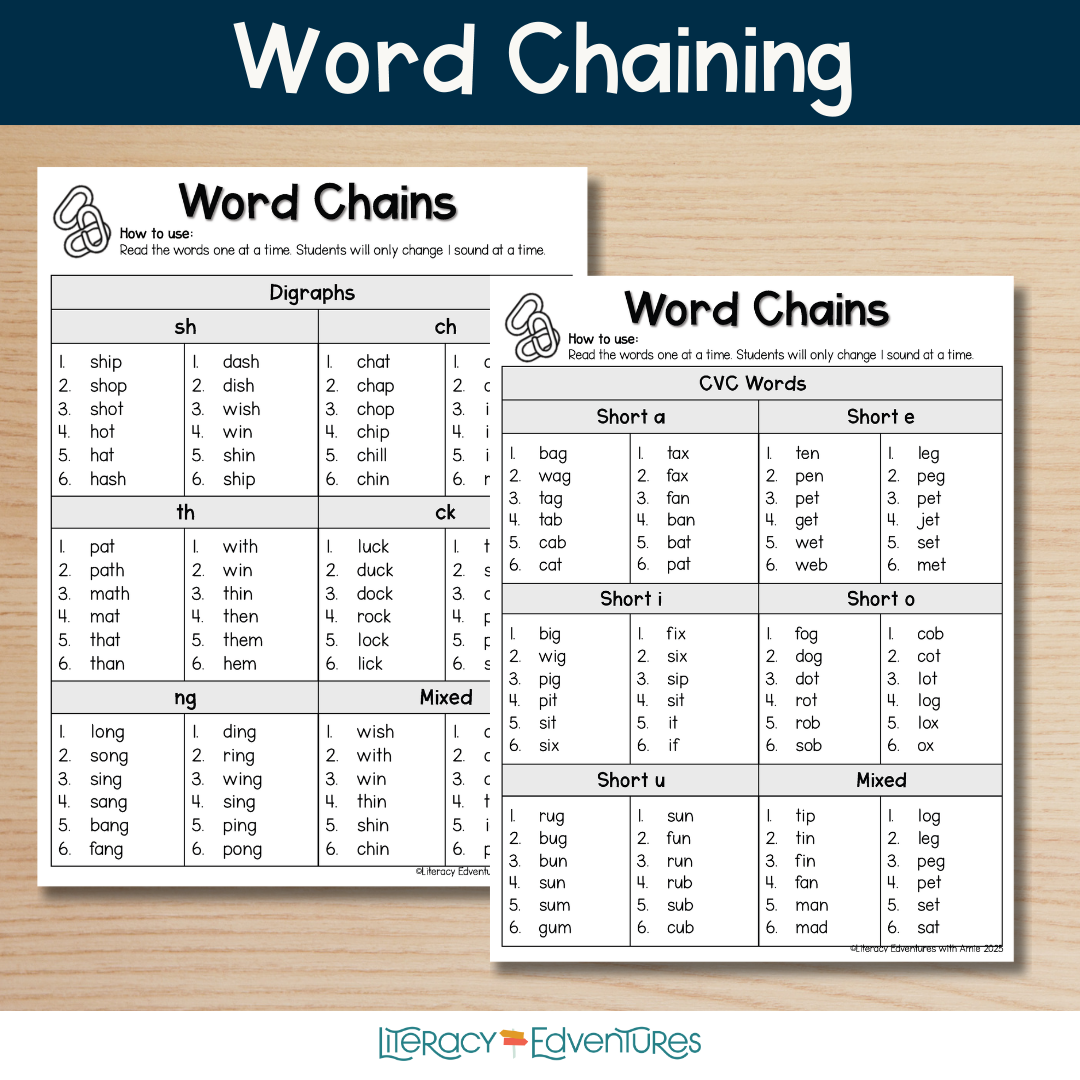
Two powerful ways to strengthen this connection is through word mapping and word chaining.
Word mapping helps students slow down and connect each sound they hear to the letters that represent those sounds. For example, students might tap the sounds in the word ship — /sh/ /ĭ/ /p/ — and then map each sound to the letters that represent it.
Word chaining takes this a step further by helping students see how small changes in sounds and letters create new words. For example:
map → tap → tip → sip → ship
By changing only one sound at a time, students begin to notice patterns and build flexibility with the alphabetic code.
During intervention, students should have regular opportunities to practice reading words that align with the phonics patterns they are learning. This might include:
mapping sounds to letters in words
building or changing words through word chains
reading phonics-based word lists
comparing spelling patterns (tap → tape)
decoding unfamiliar words
reading both real and nonsense words
Nonsense words are particularly valuable because they ensure students are applying phonics knowledge rather than relying on memorization.
When students read a word like kape, they cannot rely on memory. They must use the alphabetic code.
Over time, this type of structured practice helps students move from slow, effortful decoding to more automatic word recognition, which is an important step toward fluent reading.
3. Connected Reading With Decodable Text
Reading and spelling words in isolation is important—but it isn’t enough.
Students also need opportunities to apply their phonics knowledge in connected text.
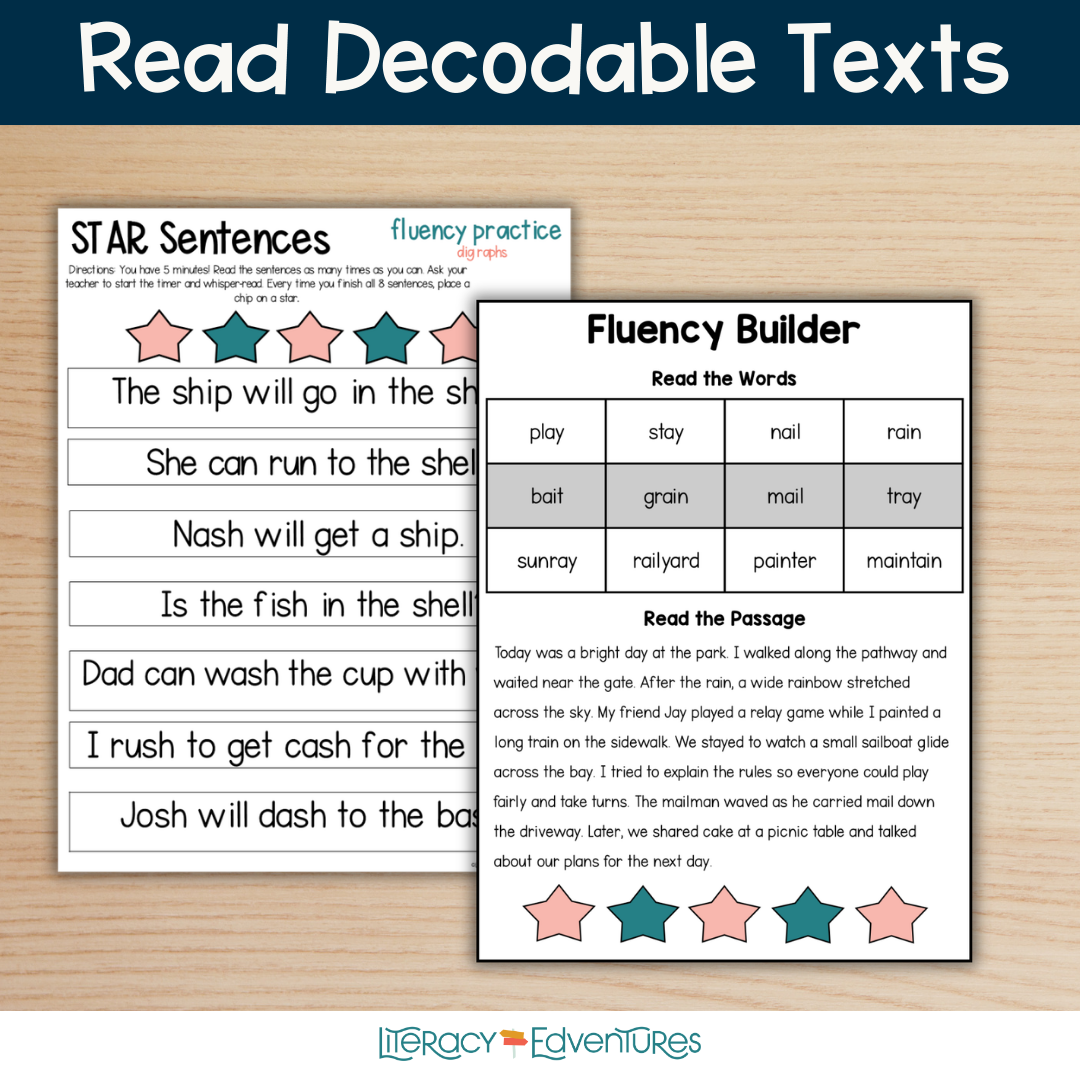
This is where decodable texts play an essential role.
Decodable texts are designed so that the majority of the words align with the phonics skills students have been taught. This allows students to apply their decoding skills while building confidence as readers.
I often describe decodables as training wheels for reading. They support students while they are still mastering the code, allowing them to build a strong foundation.
Through decodable texts, students can practice:
applying phonics patterns in context
building reading stamina
developing fluency
reading with accuracy and expression
In my own classroom and coaching work, I often pair explicit phonics lessons with structured decodable reading routines so students can immediately practice the pattern they just learned.
Over time, as students become more skilled readers, they gradually transition into more authentic texts that include a wider variety of vocabulary and spelling patterns.
But skipping this step can leave struggling readers without the structured practice they need to become strong readers.
4. Encoding: Spelling and Dictation
One thing I always remind teachers is that reading and spelling work together.
When students spell words, they’re not just practicing writing. They’re strengthening the connections between sounds and spellings that support fluent reading.
Research tells us that strong readers store words in memory through a process called orthographic mapping. But for that to happen, students have to pay attention to the sounds in a word and connect those sounds to the letters that represent them.
That’s why encoding—spelling—is such an important part of reading instruction.
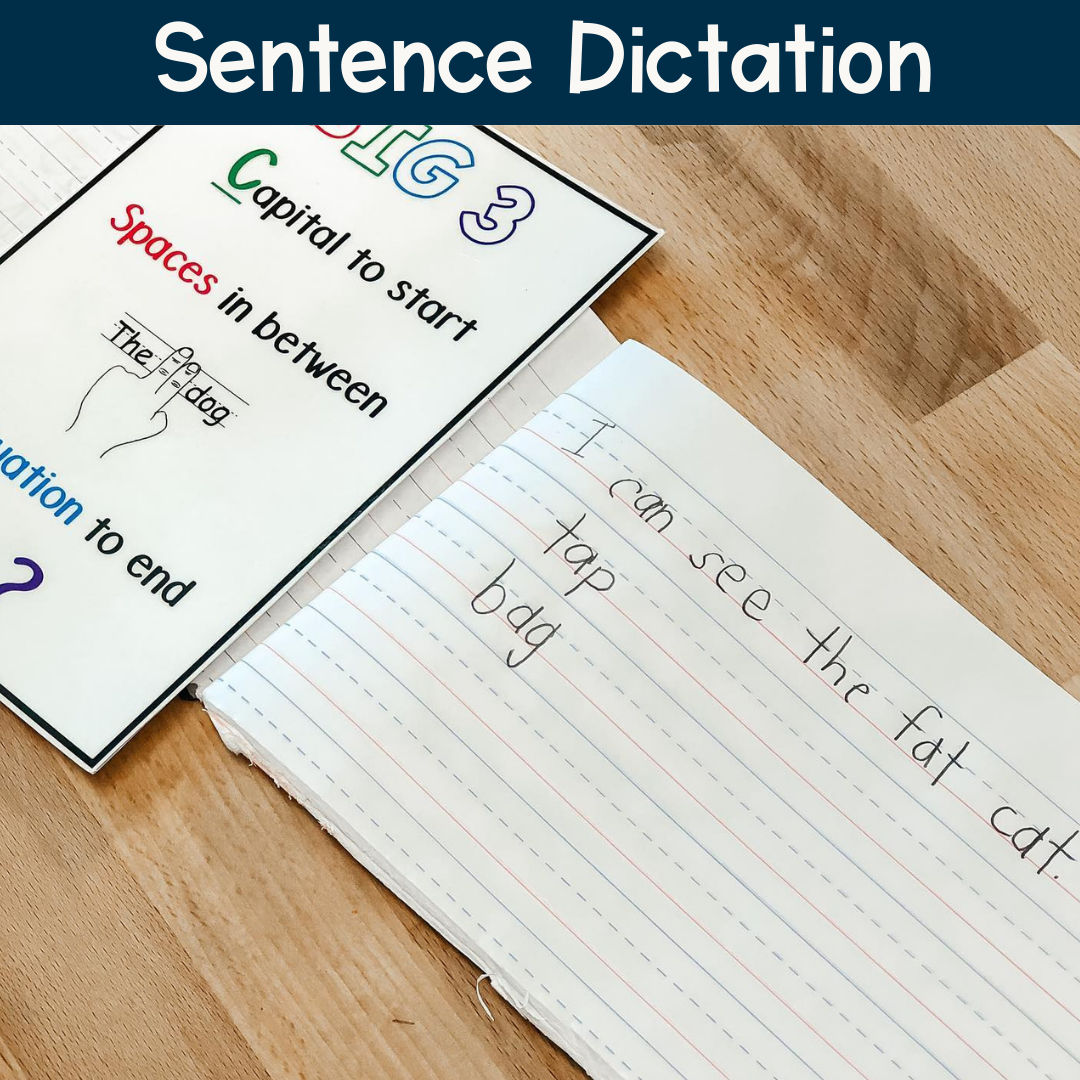
One of my favorite ways to do this is through sentence dictation.
Sentence dictation gives students a chance to apply the phonics patterns they’re learning in a meaningful way. Instead of memorizing spelling words for a test, students are actively using what they know about sounds and spellings.
For example, if we’re working on the silent e pattern, I might dictate the sentence:
“The snake hid in the grass.”
Students repeat the sentence first.
Then we write it one word at a time.
When we get to the word snake, we stop and tap the sounds:
/s/ /n/ /ā/ /k/
Then students write the word using the silent e pattern we’ve been practicing.
Sentence dictation allows students to practice several important skills at the same time:
• listening carefully
• segmenting sounds in words
• connecting phonemes to graphemes
• applying sentence structure
Sometimes dictation may include individual words when students are first learning a pattern, but sentence dictation gives students the opportunity to apply those same skills within a complete thought.
Over time, these repeated connections between sounds and spellings help words become stored in memory so students can recognize them automatically when reading.
Bringing It All Together
These four components—phonemic awareness, explicit phonics, decodable reading, and sentence dictation—work together to strengthen the alphabetic code for struggling readers.
But there is one more piece that often determines whether intervention truly works:
alignment.
Intervention and Classroom Instruction Should Speak the Same Language
One of the biggest mistakes schools make is treating intervention as something separate from classroom instruction. Students go to the intervention and practice one set of routines. Then they return to the classroom and encounter something entirely different.
Different language.
Different strategies.
Different expectations.
When that happens, students are essentially trying to learn two different systems for reading. Effective literacy systems don’t work that way. Intervention should be an extension of strong classroom instruction, not a replacement for it. That means routines, language, and instructional approaches should align across settings.
For example:
If the classroom is teaching students to tap sounds when segmenting, the intervention should reinforce that same routine.
If students are learning to blend through words instead of guessing, intervention should strengthen that exact strategy.
If the classroom is using decodable texts aligned with phonics instruction, intervention should provide additional opportunities to practice those same patterns.
When instruction aligns across classroom and intervention settings, students receive more opportunities to practice the same skills, rather than encountering something new each time they move from one learning environment to another.
And that consistency matters.
Struggling Readers Need Consistency, Not Chaos
One insight that has really stuck with me comes from literacy researcher Julia Lindsey, who often says:
“The students who struggle the most often experience the most chaos.”
Think about a typical day for a struggling reader. In the classroom, they might be asked to guess a word from the picture.
In intervention, they’re told to sound it out. During tutoring, someone tells them to look at the first letter. Later, they’re told to skip the word and keep reading. None of these strategies are usually introduced with bad intentions. Many of them came from practices teachers were trained in for years. But when those strategies conflict, students are left trying to navigate multiple systems for reading. And that creates confusion.
Struggling readers need the opposite of chaos.
They need consistency.
They need to hear the same language:
•Say the sounds
•Blend through the word
•Look at every letter
They need to practice the same routines:
• phoneme segmentation
• decoding with phonics patterns
• reading decodable text
• spelling words through dictation
When classroom instruction and intervention align, students experience more practice with the same skills, instead of starting over with something new in every setting.
And that’s where real growth begins.
The Goal of Reading Intervention
Reading intervention isn’t about adding more materials or squeezing in extra worksheets.
It’s about ensuring that students receive clear, consistent instruction that strengthens the alphabetic code. When routines align with classroom instruction—students experience something incredibly powerful:
Reading finally starts to make sense.
And when reading starts to make sense, progress follows.
Supporting struggling readers is some of the most important work we do as educators. And when we focus on the right routines and align our instruction across classrooms and interventions, we give students exactly what they need:
clarity, consistency, and the chance to finally see themselves as readers.
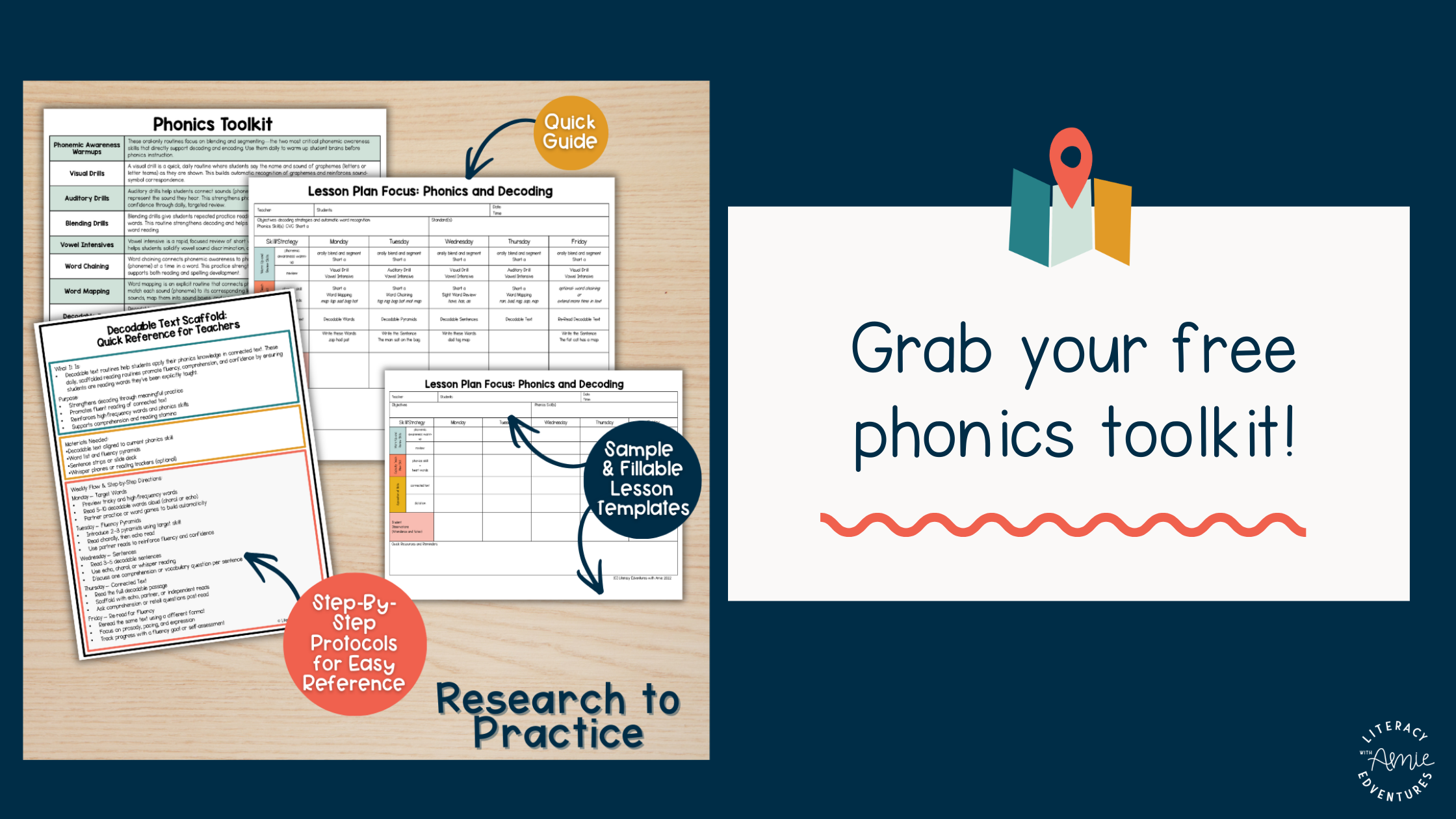
Want to make these routines easy to implement?
I’ve put together a starter kit with my favorite phonics routines and resources all in one place. It includes the blending warm-ups, word chains, decodable reading routines, and sentence dictation activities I use with students. If you want something ready to go, you can snag the starter kit!