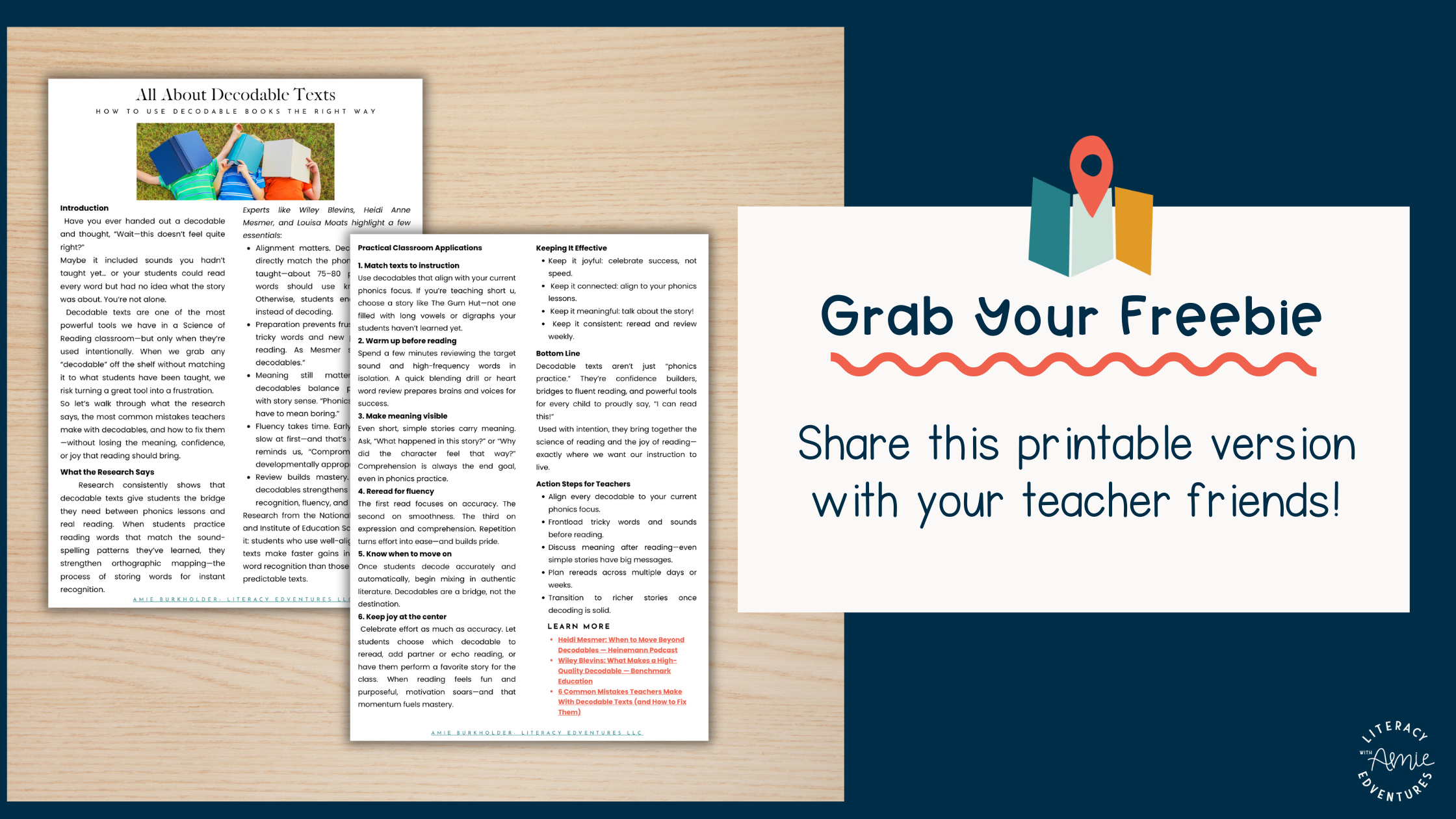
6 Common Mistakes Teachers Make With Decodable Texts (and How to Fix Them)
Are you using decodable books the right way? In this episode, we’re breaking down six of the most common mistakes teachers make with decodable texts—and how to fix them. You’ll learn how to align books to your phonics lessons, prep students before reading, balance decoding with meaning, and know when it’s time to move beyond decodables. Practical, honest, and grounded in the Science of Reading—with insights from experts like Wiley Blevins, Heidi Anne Mesmer, and Jeanne Chall.
What You’ll Learn:
The six biggest mistakes teachers make when using decodable books
How to match decodable texts to your phonics lessons (and why alignment matters)
Why “no cold decodables” is your new classroom mantra
How to turn simple stories into meaningful comprehension moments
The truth about fluency—why slow and steady is okay
Why rereading old decodables builds mastery and confidence
When (and how) to move on from decodables to authentic texts
Research & Experts Mentioned:
Wiley Blevins – What Makes a High-Quality Decodable (Benchmark Education)
Heidi Anne Mesmer – When to Move Beyond Decodables (Heinemann Podcast)
Jeanne Chall – Stages of Reading Development
National Reading Panel (2000) – Systematic phonics instruction findings
Perfect For:
K–2 teachers, reading specialists, literacy coaches, and anyone teaching early phonics or structured literacy who wants to bring more meaning and joy into decodable reading.
Key Takeaway:
Decodable texts aren’t just phonics drills—they’re confidence builders. When used intentionally, they bridge the gap between learning to decode and becoming fluent, joyful readers.
Resources:
Heidi Mesmer: When to Move Beyond Decodables — Heinemann Podcast
Wiley Blevins: What Makes a High-Quality Decodable — Benchmark Education
6 Common Mistakes Teachers Make With Decodable Texts (and How to Fix Them)
Rate & Review: If you found this episode helpful, leave a rating and review on Apple Podcasts or Spotify! It helps more educators find the show.